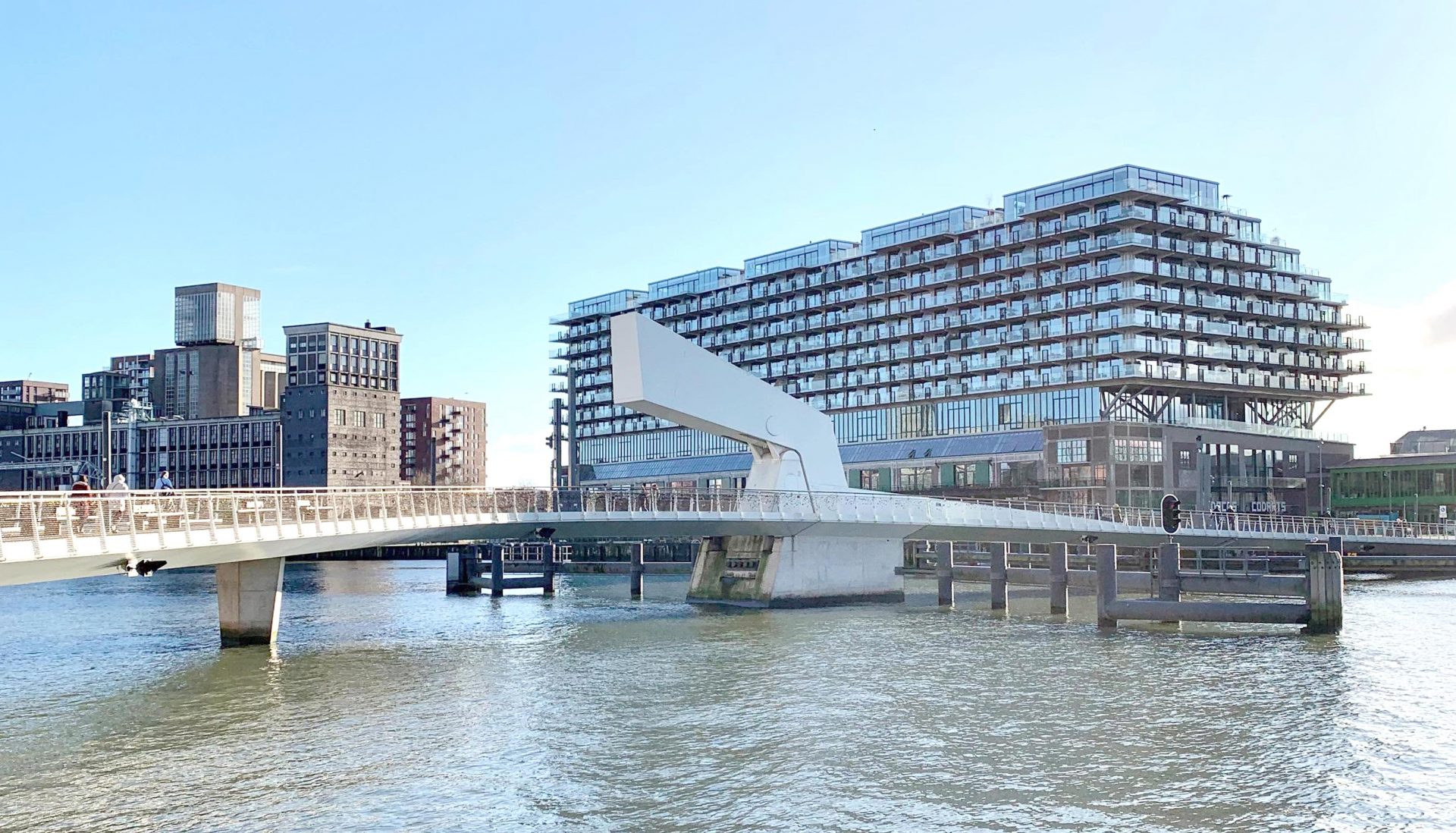
The Rijnhaven is a harbour basin in Rotterdam created at the end of the 19th century. To the north it borders the Wilhelminapier, which since the late 1990s has been transformed into a high-rise district with buildings by star architects such as OMA, Álvaro Siza and Mecanoo. To the south is the Katendrecht peninsula, a former dockworkers’ quarter whose gentrification began a few years ago. Next to two former warehouses, one of which has received a residential top-up by Mei Architects & Planners and the other is currently being transformed into an immigration museum with an observation ramp designed by MAD Architects, the concrete colossus of the Codrico flour factory still towers there, exuding a somewhat gruff harbour atmosphere.
7 City Projects
In the future, however, the Rijnhaven is to change thoroughly, because the old harbour basin is part of the 7 City Projects, into which Rotterdam plans to invest a total of 233 mio Euros over the next ten years. Due to its post-war urbanism and because a large part of the city area is below sea level, the port city faces particularly big challenges in terms of climate change. In addition to a greener and more sustainable design of squares, parks and transport axes, the aim is therefore also to activate derelict harbour basins — after all, aren’t they just unused public space?
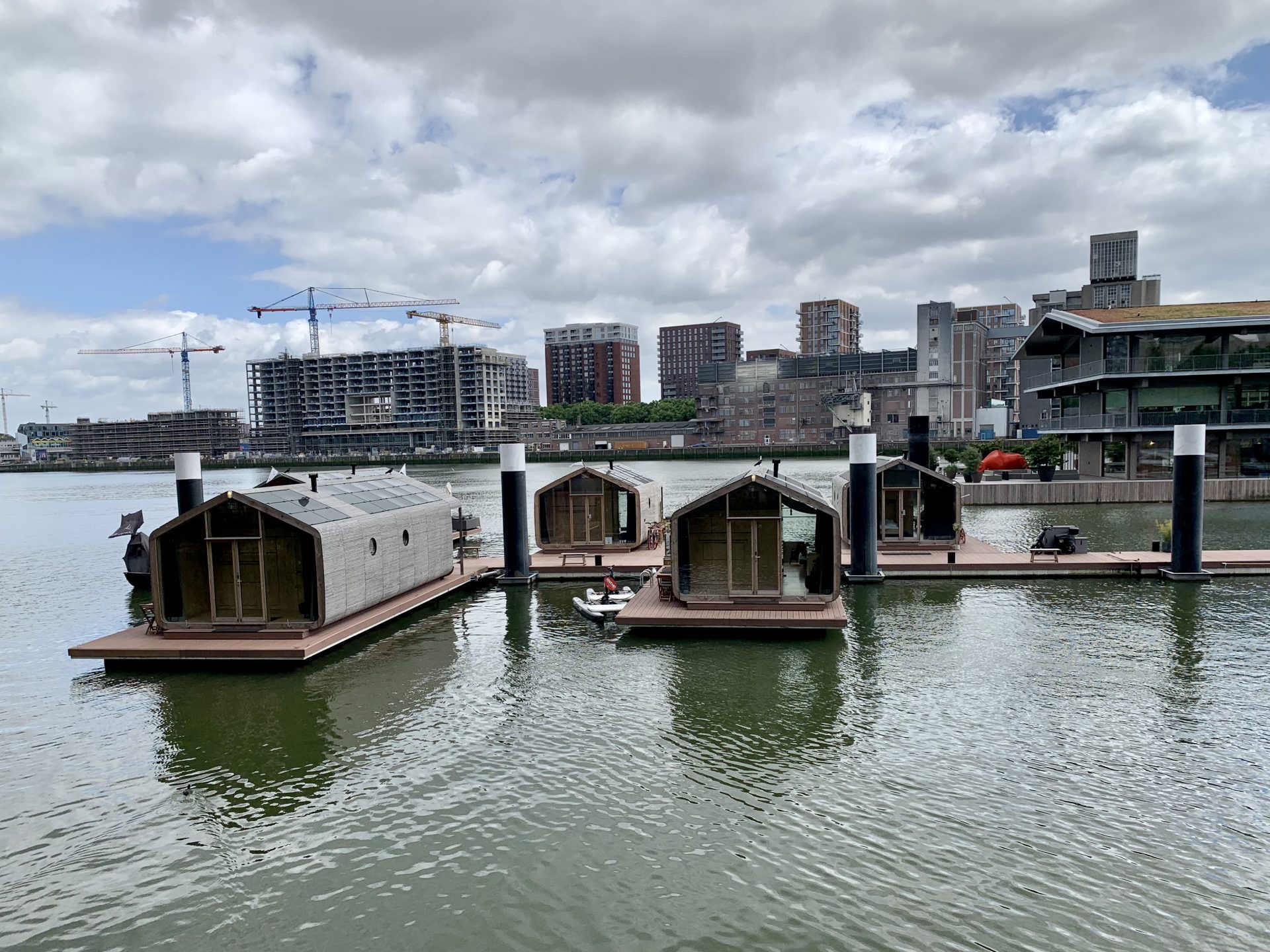
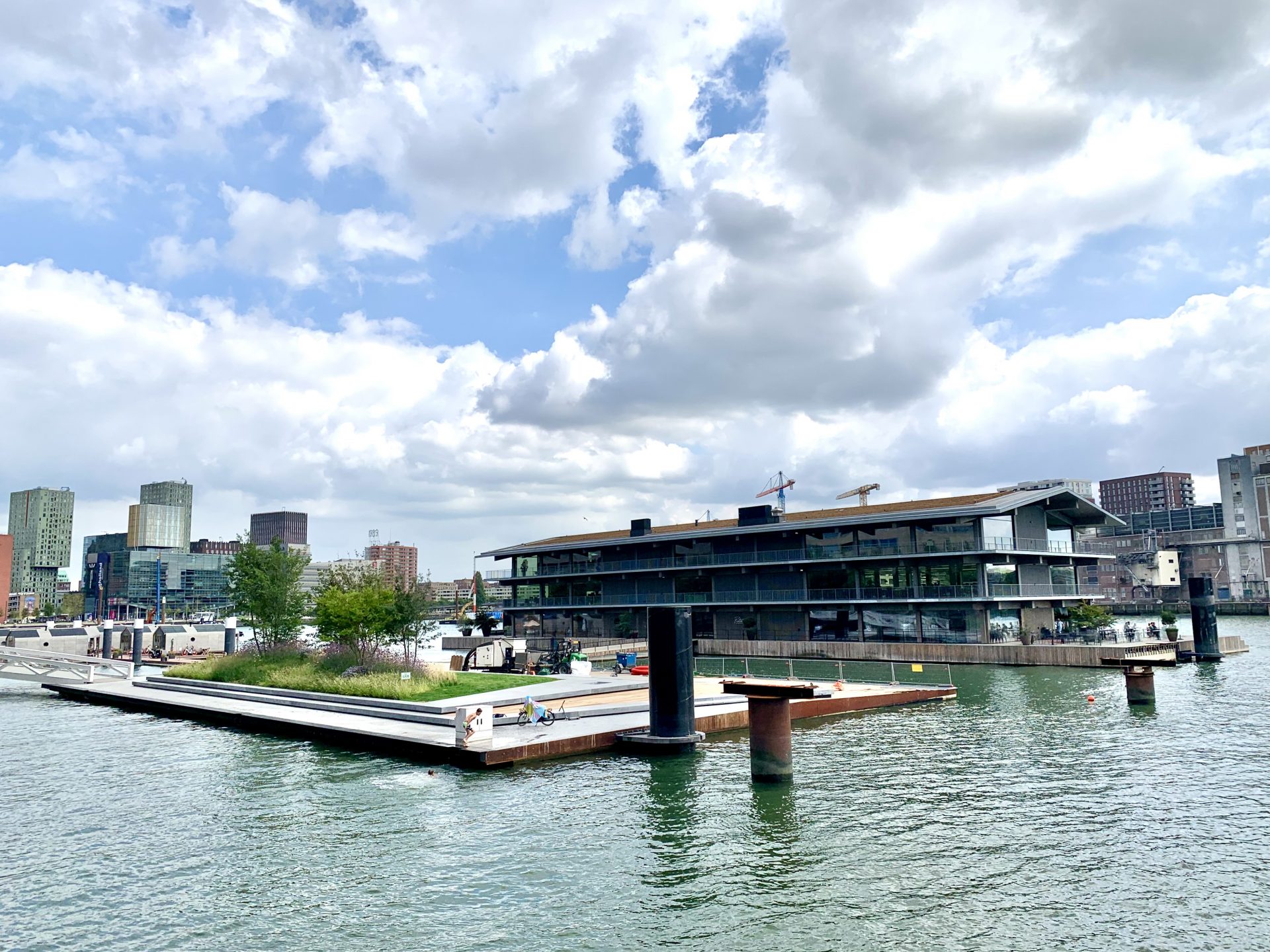
As a harbinger of future development, five floating hotel suites and the Floating Office are already bobbing in the Rijnhaven. The hotel suites are so-called Wikkelhouses: modular and sustainable tiny houses made of corrugated cardboard, developed by the construction company Fiction Factory. Cardboard is wrapped in layers around a mould, insulated on the inside with flax and covered on the outside with wood panelling. This creates 1.20-metre-deep modules that can be coupled to form houses of 15 to 60 m². In the Rijnhaven they float as tiny houseboats on pontoons, connected by jetties.