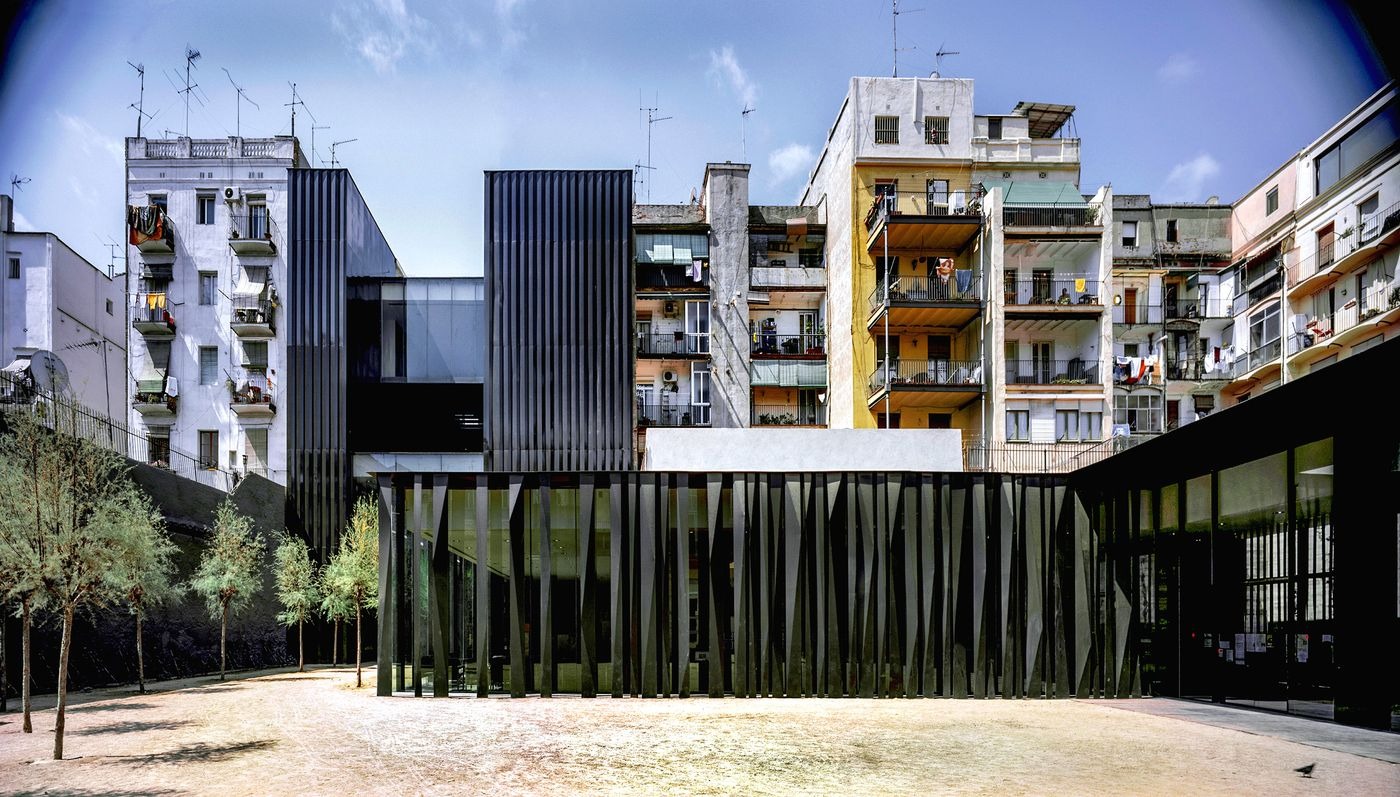
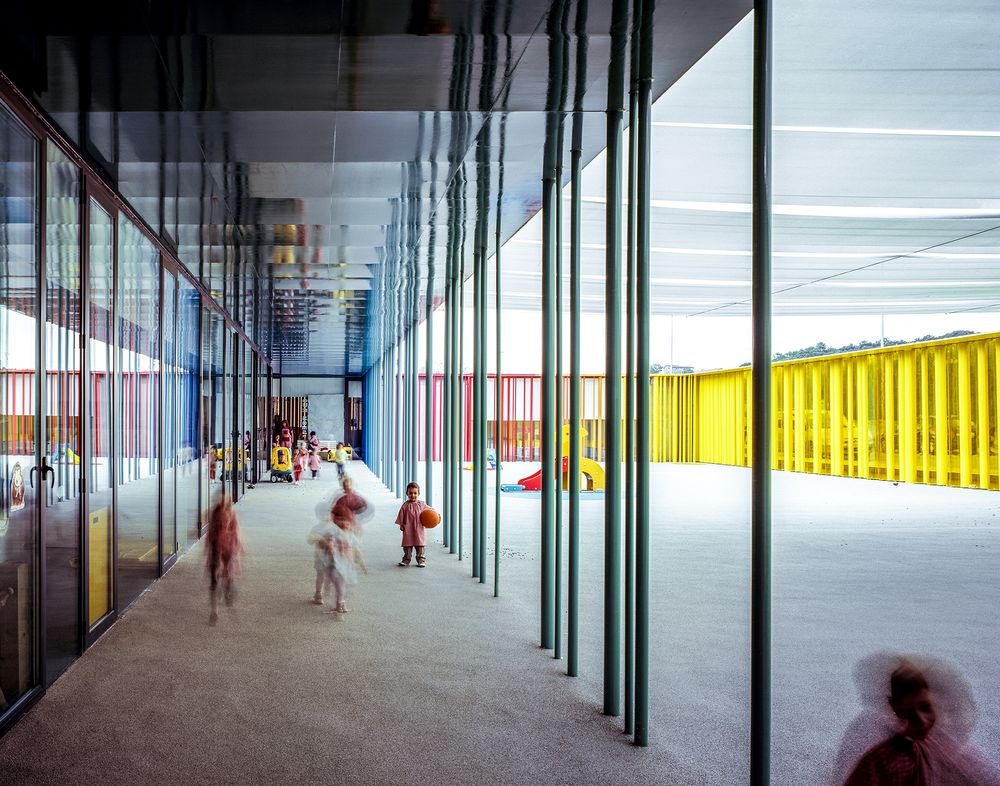
Black boxes, whether in this part of the world, in Belgium or elsewhere. Their architectural vocabulary is recognizable, globally applicable. A place is not approached through the patina of the surface, the atmosphere of the material, but rather by analyzing the existing typology, topography, function, spatiality, and history.
It is all about form, space, light and shadow, about the “promenade architecturale”. Richard Serra comes to mind. Just like him, they make a statement, provoke debate through radical ideas. One bumps into the wall and stands rooted to the spot. “I have never seen it this way before”, some might think, while others might want its demolition to start immediately. Their buildings leave no one indifferent.
In spite of their predilection for the accurate and analytical, they remain complex. The library Sant Antoni-Joan Oller, which was inserted in an existing city block of Barcelona’s Eixample district, is both gap and juncture. The outdoor area Teatro La Lira, in Ripoll, is both pedestrian bridge and place to linger, house and passageway. This approach of “complexity and contradiction”, as said by Robert Venturi, probably gives their architecture its poetic strenght. The first impression is misleading.