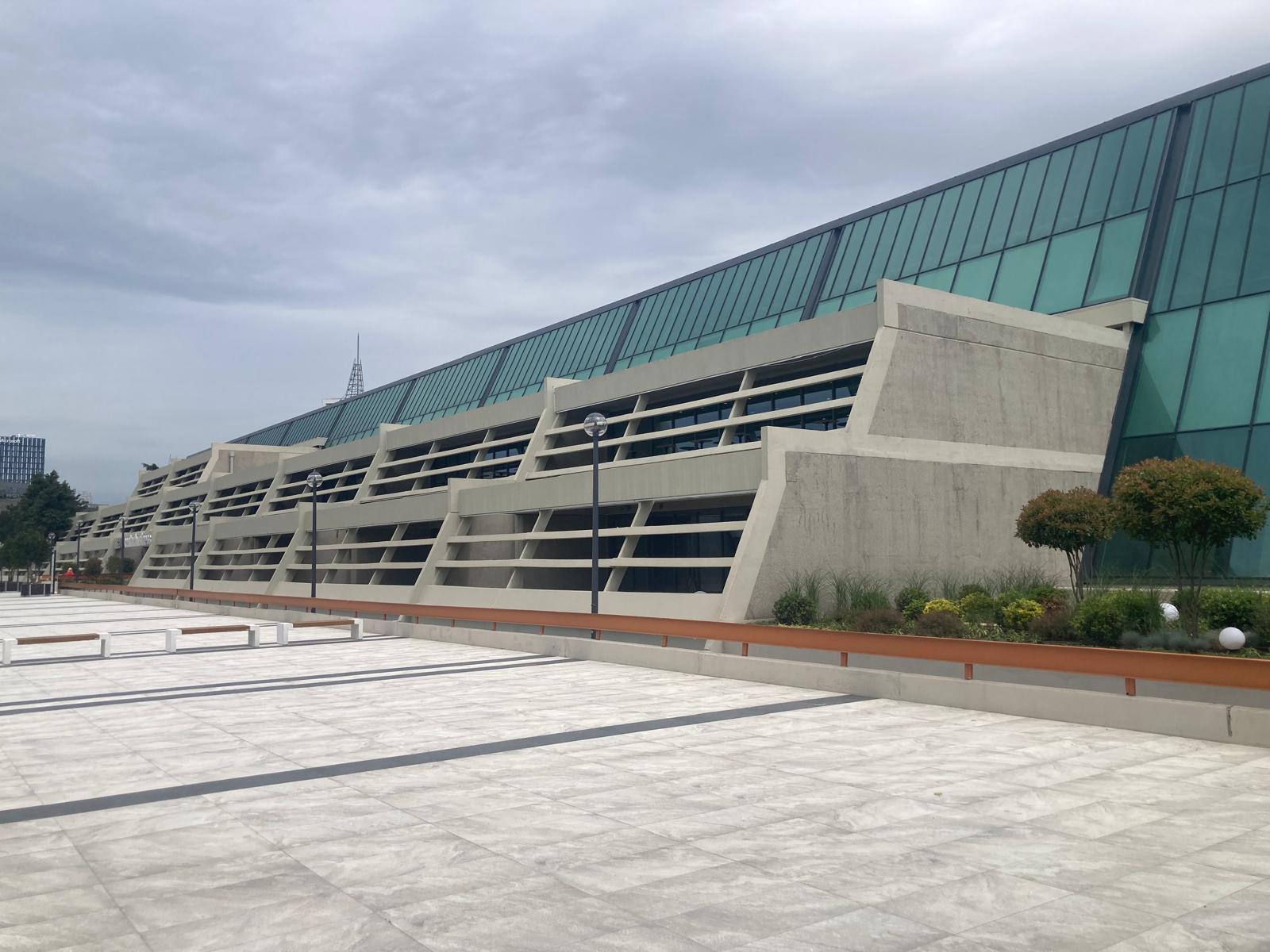
Guiding Architects, article: Facelift for the Congress Center “Sava” in Belgrade (Fig. 1)

Sava Centar West part after Reconstruction. ©Violeta Vujovic Salhofer

Following a three-year renovation and transformation, architectural tours in Belgrade once again feature the “Sava Centar”—one of the most significant multifunctional congress centers of the 1970s and a landmark of Brutalist architecture. The building was nominated for the Pritzker Architecture Prize in 1978, underlining its international architectural relevance.

Often referred to as the “Glass Palace” because of its vast slanted glass façades, the complex was designed by Serbian architect Stojan Maksimović. It is composed of two functional units with separate entrances. The western wing contains congress and business facilities, while the eastern wing—accessible from the river—houses the Blue Hall, celebrated for its outstanding acoustics and seating capacity of approximately 4,000.

The western section was inaugurated in June 1977 on the occasion of the Conference on Security and Co-operation in Europe (CSCE), after a remarkably short planning and construction period of just one year. The full complex has been in operation since 1979. Spanning 100,000 square meters, it occupies a prime location in New Belgrade, surrounded by green areas near the river and the city highway connecting major European routes.
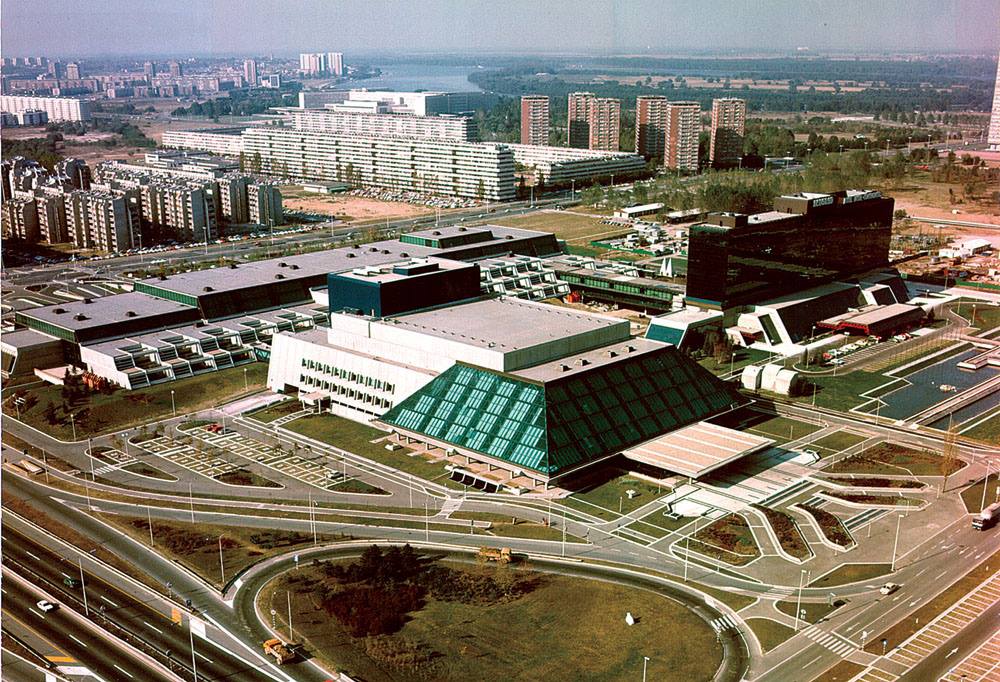
Guiding Architects, article: Facelift for the Congress Center “Sava” in Belgrade (Fig. 2)

Sava Centar beginning of the 1980. ©Facebook Stranica ‘Stare slike Novog Beograda’

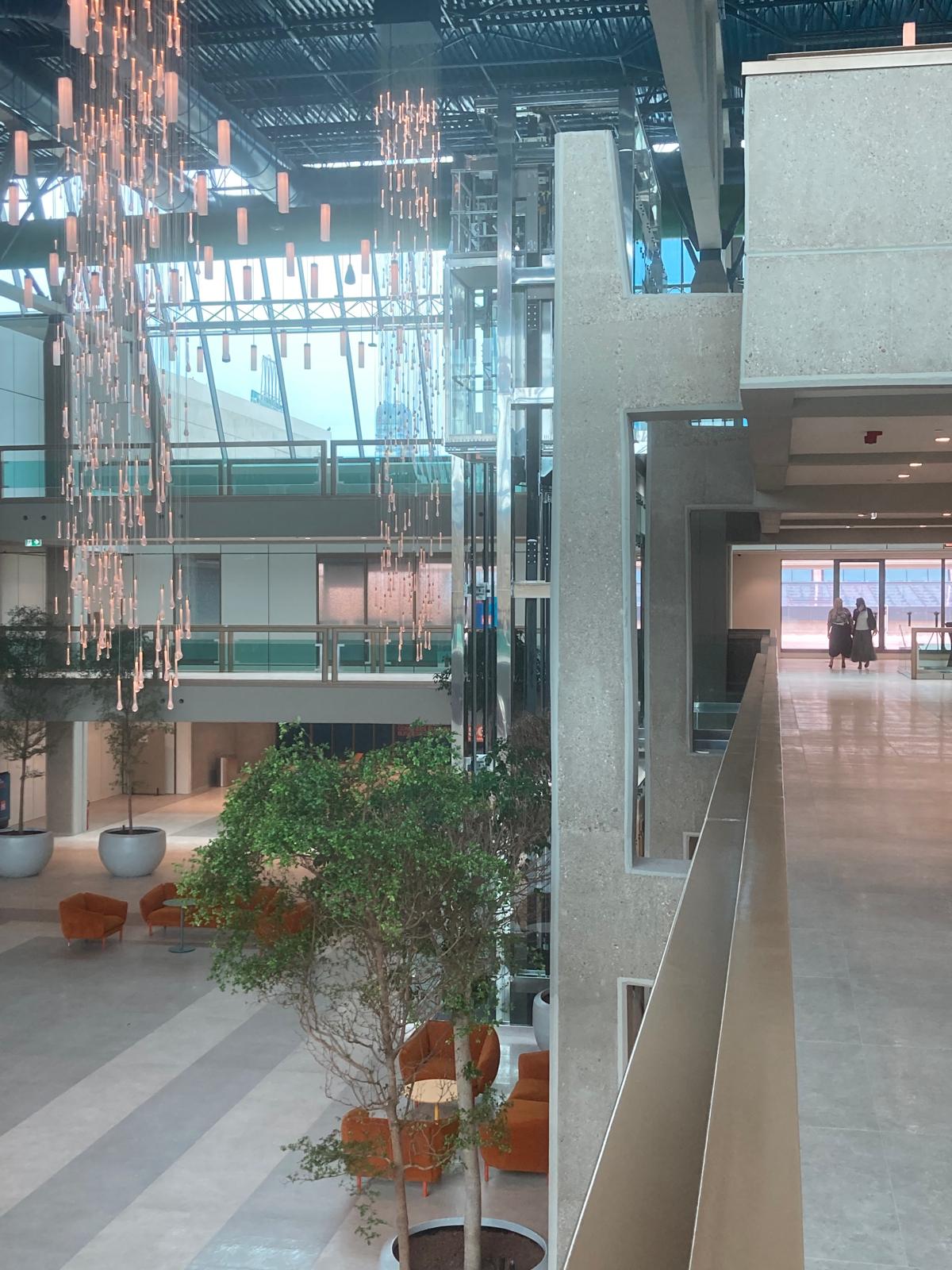
Upon entering, visitors encounter an interior conceived as a self-contained urban landscape. Clearly structured circulation routes are enhanced by colorful wayfinding systems and Op Art graphics. Exposed technical installations reflect the building’s high-tech character, while interior landscaping—including a stream and small bridges—adds a surprising organic dimension. A flowing sequence of spaces, defined by shifting ceiling heights, materials, colors, and light, guides visitors from the expansive entrance hall past lounge areas furnished with 1970s design classics to more than 40 adaptable congress halls. Terraced façade levels provide offices and apartments with adjoining outdoor spaces.

After its acquisition by Delta Holding in 2020, extensive renovation began. Works included restoration of prefabricated concrete elements, structural reinforcement of foundations and the lightweight roof to support solar panels, modernization of technical and digital systems, and installation of advanced thermal insulation. A new triple-glazed façade significantly improves energy efficiency, reducing overall energy consumption by 50%.

Guiding Architects, article: Facelift for the Congress Center “Sava” in Belgrade (Fig. 3)

Sava Centar entrance Hall after Reconstruction. ©Violeta Vujovic Salhofer

While restoring the exterior envelope proved relatively straightforward, the interior required substantial intervention due to uncontrolled alterations during the 1990s and 2000s. Revitalized and awarded a BREEAM sustainability certificate, the renewed “Sava Centar” reopened its doors in 2023 as a contemporary, energy-efficient congress venue.